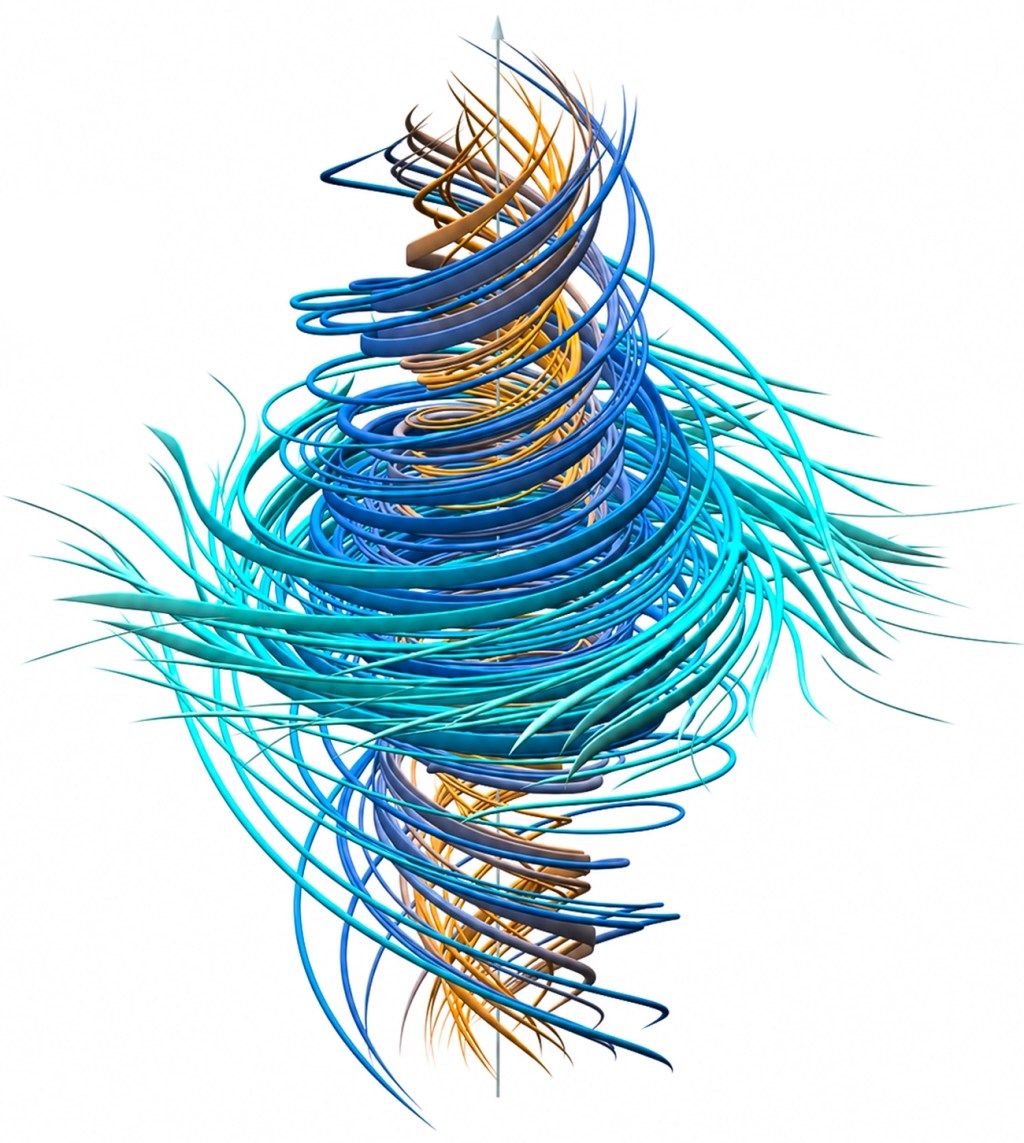
The Navier-Stokes equations were created almost 200 years ago. Claude-Louis Navier and Gabriel Stokes set down equations to try and describe the seemingly chaotic motion of fluids, mathematically. In early September, OpenAI claimed that a team of 10,000 autonomous AI agents and 88 hours made a significant breakthrough in these equations.
So, should high school students aspiring to be mathematicians be worried? Well, if they’re worried about AI taking jobs, then no, there will be plenty of opportunities. Mathematicians do more than solve equations– more than what AI can do in the foreseeable future. However, if they worry for a drastic change in the field, then perhaps they’re right. An important thing to note, though, is that the inclusion of AI will help mathematical advancements and help enhance humans to be more capable and efficient. Instead of limiting the need for humans in the area, it’ll increase it.
What is AI good at? It’s already amazing at proofs, examples, and generating conjectures. These tools can help speed up human activity in some areas, increasing productivity. This can already be seen in history. Computers made massive calculations possible (calculator), but mathematicians were still standing, more productive, stronger, and being able to tackle more complex and ambitious problems.
Source(s):


Leave a Reply